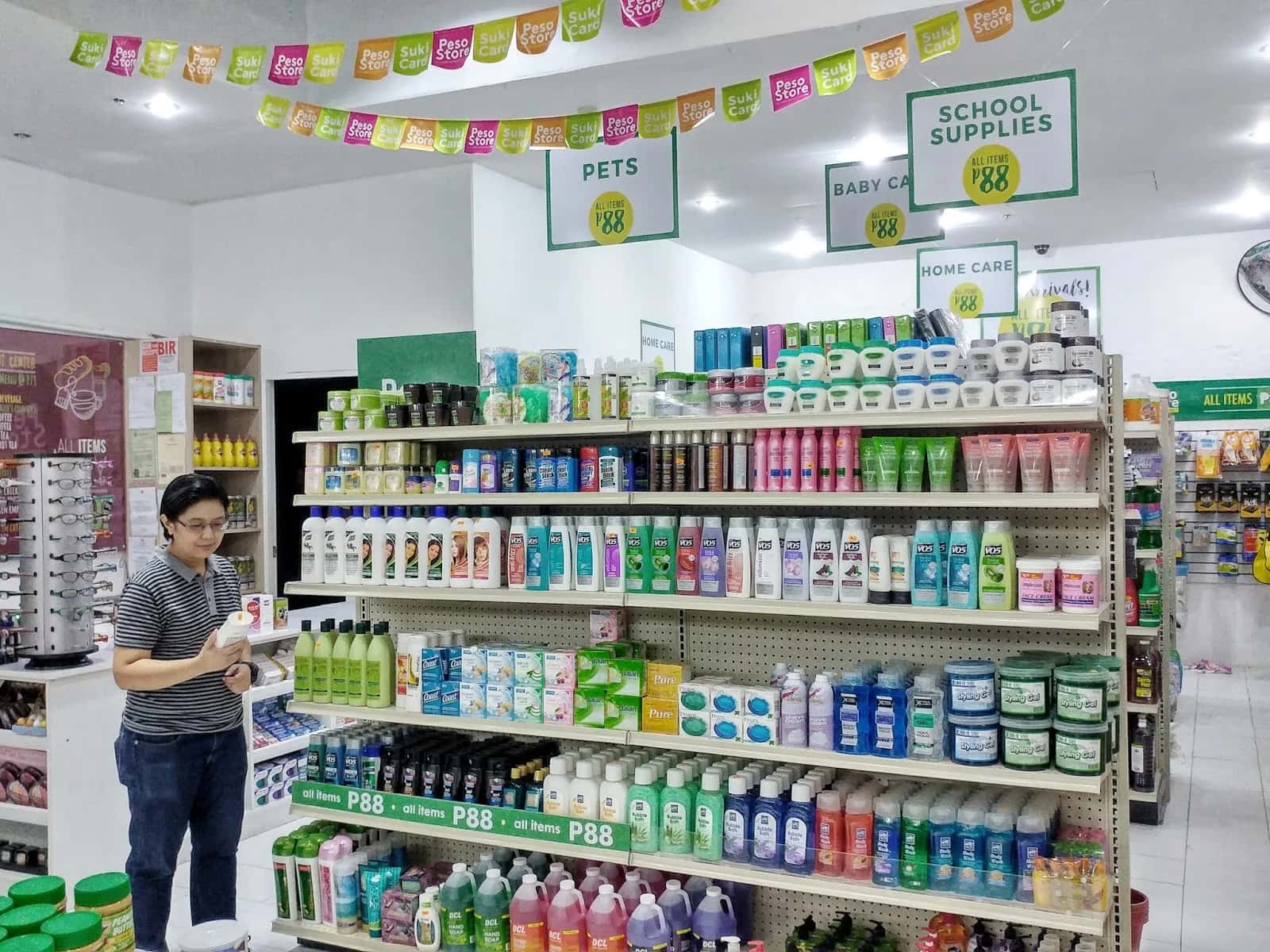
The 99 Peso Store
Clothing & Footwear
- Franchise fee
- ₱150k
- Total investment
- ₱500k–₱1M
🎁 Start Your 1 Month Free Trial of the Full Plan, Exclusively for Brands & Advisors.Get Started
Browse 3 retail & convenience franchises up to ₱1M, with investments of about ₱1M each, franchise fees mostly between ₱150k and ₱250k, and most paying back in about 18 months.
Updated
Clothing & Footwear

Meat Shop
Retail & Convenience
Up to ₱1M buys a retail and convenience franchise built around a proper inline store, not a cart or a kiosk. Entry runs from around ₱500,000 to the ₱1M mark, and a franchise fee typically sits between ₱150,000 and ₱250,000. Payback at this level commonly lands around a year and a half. That is enough money for a real storefront, but not so much that the reader can skip the arithmetic on rent, stock, and staff before signing anything.
The gap between ₱500,000 and ₱1M in retail and convenience is mostly about space and stock, not concept. A package near the lower end usually means a smaller footprint, a shorter lease, and a leaner opening order. A package closer to ₱1M buys a bigger unit in a busier spot with a fuller shelf on day one. The franchise fee sits in a narrower range, around ₱150,000 to ₱250,000, so most of the difference between packages goes into the physical store rather than the paperwork of joining. A first-timer choosing where in this range to land should think about how much floor space the location actually needs to earn its rent. Overspending on square footage in a spot that never fills is a common way to burn through this budget faster than the payback timeline assumes. The safer read is to treat the top of this budget as what a strong corner or a mall-adjacent spot can justify, and the lower end as what a quieter street position can support just as well.
Every package that fits this budget is built as an inline store, a fixed unit inside a commercial strip or a small building rather than a cart, a kiosk, or a home-based setup. That format choice shapes what the money actually buys: a lease, fit-out, shelving, and a stockroom, plus the utilities and manpower a fixed address needs. The reader is committing to one location for the length of the lease. The site itself carries more weight here than it would for a cart that can move if a corner does not work out. An inline store at this level usually covers everyday retail or convenience goods that people buy on the way past, so foot traffic past the door matters more than destination pull. Anyone comparing two available units should walk both at different times of day before deciding. The same street can behave very differently in the morning rush and the evening lull, and an inline lease is not easy to unwind once it is signed.
With payback commonly sitting around eighteen months, the operating math at this budget rewards steady, predictable footfall over a big opening splash. A store this size typically needs at least two staff on rotation to cover full trading hours, plus someone the owner trusts to handle cash and restocking when they cannot be there themselves. Inventory turns faster than the franchise fee might suggest. Retail and convenience goods live on shelf life and repeat purchase rather than one big sale, so restocking discipline matters as much as the initial order did. Utilities, security, and basic maintenance on a fixed unit add a running cost that a cart or kiosk would not carry, and that cost shows up every month whether the till is full or not. A simple weekly routine for counting stock, checking expiry dates, and reviewing which lines actually move gives an owner an early read on whether the store is on pace for that eighteen month payback.
The ₱500,000 to ₱1M range is not just the franchise fee and the fit-out. It also has to stretch across a security deposit and advance rent on the lease, the opening stock order, point-of-sale equipment, and signage. On top of that it needs a buffer of working capital for the first few months while the store builds a regular customer base. Skipping that buffer is the most common way this budget runs short. Even a store that reaches its expected footfall quickly still needs cash on hand to pay rent and staff before the sales catch up. A reader working with the lower end of this range should budget conservatively for working capital rather than putting every peso into stock and fixtures on opening day. Franchise fees between ₱150,000 and ₱250,000 typically buy training, initial supplier access, and brand support, not the physical store itself. That line item should be treated as separate from everything the reader still has to fund directly to get the doors open and staffed.
Now that you've seen what's here, a real advisor can help you shortlist and weigh the options against your budget. Free, at your pace.

Financing Readiness · Site Selection

Low-Capital Startups

Franchise Agreements · Multi-Unit Expansion

Low-Capital Startups · Site Selection
Are you a franchise advisor?Get your own workspace here
Choose a kind of retail & convenience business and see only its franchises up to ₱1m, with their fees and investment ranges.
Get honest answers on fees, payback and the best setups for your area, free and with no pressure.
Size alone should not impress you, even when three retail & convenience franchises are listed between ₱900k and ₱1M at ₱1M. A big pool can hold many near identical packages, which makes the choice feel harder than it is. Group lookalikes together and keep one from each group. That step can shrink the pool quickly, leaving you with a few really different packages to compare in detail. Differences are where your decision lies.
Storage for your stock is a cost that sits outside ₱1M and grows with the business. If your outlet is small, you might need a separate storeroom, extra shelving or refrigeration, and some owners end up renting another space entirely. Before choosing your location, ask how much stock you must keep on hand and confirm that the space can hold it without extra rent.
Comparing retail & convenience franchises at ₱1M, you will see inline stores with 3 franchises. Setups that look similar in price can differ widely in what you get, so laying them out together helps a lot. Line up the listings for each format and note the investment, inclusions and space needed in a simple table, then cross out any option that fails on a point that truly matters to you.
If you are thinking of leaving your job, first confirm that ₱1M covers every opening cost. The three retail & convenience franchises that quote an investment between ₱900k and ₱1M leave out deposits, permits, renovation, stock and working capital. Total those with the quote, because an outlet that runs short of cash on day one cannot pay you either. Only then decide whether the budget is enough.
Beginners with a bookkeeping habit tend to settle into a ₱1M retail & convenience franchise more smoothly, so test that habit before you commit. Run a pretend month on paper, listing daily sales, supply purchases and wages as if the outlet were open. If keeping those records feels easy, you already have a useful skill for this level of investment. If it feels like a chore, plan to pay for part-time bookkeeping help and add that cost to your budget from the start.
Many people overlook the money tied up in insurance policies or old investments when they try to raise ₱1M for a retail & convenience franchise. Some policies have cash values that can be borrowed against or withdrawn. Check your existing policies and accounts, ask the provider about any options, and weigh carefully whether touching them is worth it for the franchise. Read the fine print on any withdrawal, since some options reduce your coverage or carry charges.
The fixed part of ₱1M is what every outlet receives, usually equipment, stock, training and signage. Fixed items set the floor of a package, while optional ones show where an offer leaves room for you to add or drop pieces. Ask the franchisor which items are fixed and which are optional, record the answer on a written inclusion sheet, and compare sheets across offers.
Franchisors in the retail & convenience space at ₱1M generally charge a franchise fee from ₱150k to ₱250k. Not every peso of that payment is always treated the same way, and some contracts split it into a refundable reservation portion and a nonrefundable balance. Ask exactly which part, if any, can be returned, and under what conditions, so you understand how much of your money is truly at risk once you pay.
Compare how many retail & convenience franchises start at each budget level, from the smallest packages up.
Retail & Convenience franchises priced close to your budget, worth a look if you can stretch your savings or want to spend less.
LPG Dealership

Meat Shop

Retail & Convenience

Retail & Convenience
LPG Dealership
LPG Dealership

Retail & Convenience
Meat Shop
Compare retail & convenience franchises with other industries at the same budget, each with its own brands, fees and investment ranges.

Carts, kiosks, and full restaurants.
11 brandsFrom ₱450k
Mang Bok's Lechon Manok, Bugong Roast Chicken, Don Lemon +8 more
See brands
Bread, cakes, and pastry shops.
3 brandsFrom ₱500k
Bibingkinitan, Pan De Sal Express, Famous Belgian Waffles
See brands
Coffee, milk tea, and cold drink shops.
3 brandsFrom ₱249k
Take-O-Coffee, Tea Talk, Coffee But Better
See brands
2 brandsFrom ₱500k
ALOHA (Abacus Learning of Higher Arithmetic), Bricks 4 Kidz
See brandsCompare industries by budget, daily work and payback before you choose one, free and with no pressure.

Learn practical inventory control steps for your Philippine franchise to cut waste, prevent loss, and protect your capital.
Aug 14, 2026 6 min read
Learn how non-compete clauses work when exiting a franchise agreement in the Philippines, protecting your investment after closing.
Jul 20, 2026 5 min read

Learn how to secure financing for your Philippine franchise, from preparation to approval. A practical guide for new operators and OFWs.
Jul 20, 2026 5 min read