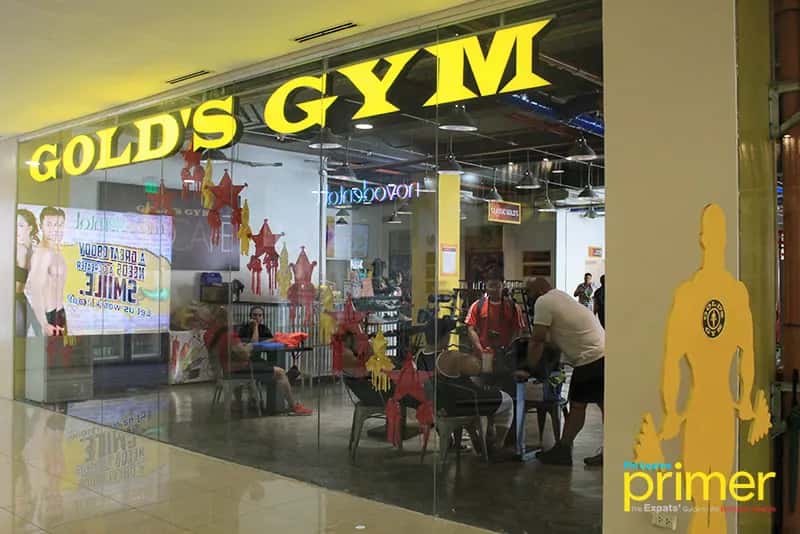
Gold's Gym Philippines
Gym
- Franchise fee
- ₱3M
- Total investment
- ₱25M–₱60M
🎁 Start Your 1 Month Free Trial of the Full Plan, Exclusively for Brands & Advisors.Get Started
Browse 22 gym franchises over ₱1.5M, with investments from ₱4.5M to ₱40M, franchise fees mostly between ₱500k and ₱3M, and most paying back in 24 to 36 months.
Updated
Gym

Gym

Gym
Gym
Gym

Gym
Gym

Gym

Gym
Gym

Gym
Gym
Gym

Gym
Gym

Gym
Gym
Gym

Gym
Gym
Gym
Gym
Above ₱1.5M is where most gym franchises actually sit, and this budget runs from a modest boutique studio all the way up to a full multi-zone club. Investment stretches from about ₱1.6M to ₱60M, with fees between roughly ₱240,000 and ₱25M. Payback claims stretch anywhere from about a year and a half to four full years, depending heavily on how large the facility is and how fast it fills. That spread means the number at the top of a brochure says very little on its own about what a given location will actually take to open.
More people now work from condo units or shared offices with no room to exercise at home, which pushes daily movement outside the house and into a paid facility instead. Health screenings at work and rising awareness around lifestyle-related conditions keep adding new members who never would have joined a decade ago. Social feeds full of visible transformations do some of the marketing work for free, pulling in curious first-timers who might never have walked past a gym otherwise. Those forces together explain why so many different formats, from boxing clubs to badge-in strength gyms, can all find paying members in the same city at once. Investment at this level runs from about ₱1.6M past ₱60M precisely because those formats need very different amounts of space, equipment, and staff to open their doors. A boutique studio built around one training style can open on a fraction of what a full club with a pool or a large weights floor requires, even though both are selling the same underlying shift toward paying for movement.
A smaller, focused format tends toward the faster end of the payback range, while a full-size, multi-zone gym takes longer to turn a profit simply because more space has to fill with paying members first. Fees climb with facility size too, since a bigger investment usually comes with more systems and support built into what the fee actually covers. None of these figures move in isolation. A reader should expect the fee, the total cost, and the payback claim to rise and fall together, rather than treat any single number as the full picture on its own. A low fee paired with a high total cost is usually asking an operator to fund more of the buildout independently, without much support built into the package for it. Reading the three figures side by side, rather than picking out whichever one looks most attractive, is what actually tells a reader what a given facility will cost to run before it turns a profit.
A new gym almost never opens at full capacity. The early months go toward converting curious first-timers into members who keep paying long after the opening promotion ends. Staff hiring and training need to be locked in before the doors open, since a facility this size cannot run safely on a skeleton crew during its busiest early weeks. Payback claims of eighteen months to four years already assume that ramp-up period, not a facility that is full from day one. Word tends to spread slowly at first and then faster once a location earns a reputation for being properly run, with clean equipment, working showers, and staff who show up on time for every assigned shift. A slower first few months is normal at this investment level, not a sign that something has gone wrong. Operators who set aside a cash cushion for that stretch are the ones who reach a stable membership base without a scare along the way.
Most brands at this level lease space inside an existing building, and a smaller share build a standalone structure with its own lot and full control over the layout. That difference tends to track closely with what kind of gym experience a brand is actually selling. A round-the-clock access chain almost always needs the standalone or ground-floor route to let members badge in outside normal building hours. A scheduled-class format built around boxing or small-group training operates comfortably from a leased inline unit inside a commercial strip. Weighing the package against the specific training style on offer, rather than against the investment figure alone, reveals more about whether a brand actually fits a given location than the peso figure alone ever will. A reader torn between two very different formats should picture the actual member walking through the door at 6 a.m., not the polished brochure photo, before signing anything at all.
Now that you've seen what's here, a real advisor can help you shortlist and weigh the options against your budget. Free, at your pace.

Financing Readiness · Site Selection

Low-Capital Startups

Low-Capital Startups · Site Selection

Franchise Agreements · Multi-Unit Expansion
Are you a franchise advisor?Get your own workspace here
Compare gym franchises with other fitness businesses over ₱1.5m, each with its own brands, fees and investment ranges.
Get honest answers on fees, payback and the best setups for your area, free and with no pressure.
You have 22 gym options at the ₱2M level, each with an investment above ₱1.5M. The quickest way to cut that list down is to speak with people who already run these outlets, since they can tell you how the support, supply deliveries and daily workload really feel. Ask each franchisor for contact details of current franchisees, and treat any reluctance to share them as useful information. A short conversation with an owner often settles questions a sales call cannot.
Whether ₱2M turns out to be enough depends largely on the costs around it, starting with the space, the people and the stock. Rent and deposits secure the location, salaries keep it staffed, and reorders keep the shelves or service running after the starter supplies are gone. Ask the franchisor for a sample monthly expense breakdown from an existing outlet and use it as the starting template for your own plan.
Keep part of your money aside as you raise ₱2M, because a gym franchise will need cash to run before it pays for itself. Many new owners spend everything on the package and then struggle to cover rent and supplies in the first months. Plan for a separate reserve in addition to the franchise fee, and treat that reserve as part of your total funding target rather than an afterthought.
For a gym franchise, ₱2M should be tested against the full cost and not the headline price. The 22 options quoting an investment above ₱1.5M leave out rent deposits, permits, renovation, starting stock and operating cash. Get written estimates for each, add them to the quote and compare the total with your budget. Only an offer that still fits after this exercise is realistic for you.
Imagine comparing two gym franchises that each ask ₱2M, where one delivers equipment, signage, starter stock and on site training while the other gives only the franchise fee and a manual. An advertisement would show them as equal, even though the contents are far apart. Price the gap by adding up what the bare offer would need to match the richer one, then add that sum to its asking price before judging which deal truly costs less.
Fee terms can change when you leave, so note that gym franchises at ₱2M usually charge ₱500k to ₱3M at the start. Ask whether the franchisor charges a transfer fee if you sell, an exit fee if you close early or a penalty if you end the agreement before its term. Also ask if any of the original fee comes back in those cases. These answers show the full cost of your decision, not only the entry payment.
Franchisors tend to quote 24 to 36 months as the payback period for gym franchises costing above ₱1.5M. That figure assumes the business is run with care from day one, which includes keeping clean books. Set up a simple record of daily sales and expenses as soon as you open, so you can compare your actual progress with the estimate every month and adjust early if you fall behind.
Yes, a gym franchise at ₱2M can be a good first choice if you can picture yourself doing the same work for years. Beginners who last tend to enjoy the daily routine, not only the idea of owning a business. Try listing what you like and dislike about the tasks involved, such as early mornings, handling complaints or counting stock. A fair balance of likes over dislikes is a good sign, and a long list of dislikes deserves serious attention.
Just because Quezon City, Makati and Mandaluyong have the most gym franchises at ₱2M does not mean you have to open there, since nine franchisors in this range accept franchisees nationwide. Think about where you can be present most often, whether that is near your home, your workplace, or a relative who can help. Then ask the franchisor whether that area is available and what kind of site they would need there before you start looking at spaces.
For ₱2M, gym franchises can be set up as inline stores with 22 franchises and standalone stores with 5. A useful test is whether you could run the setup yourself on a day when your crew does not show up. Ask the franchisor how many people each format needs at minimum, and choose a setup you could cover alone or with a family member in a pinch, so a single absence never forces you to close.
Compare gym franchises with other industries at the same budget, each with its own brands, fees and investment ranges.

Carts, kiosks, and full restaurants.
267 brandsFrom ₱150k
Jollibee, Shakey's, Mang Inasal +264 more
See brands
Salons, barbershops, and spa services.
85 brandsFrom ₱499k
Big Apple Express Spa, Bruno's Barbers, Chroma (by Cre8) +82 more
See brands
Coffee, milk tea, and cold drink shops.
65 brandsFrom ₱500k
Zagu, Macao Imperial Tea, Ai-CHA +62 more
See brands
Mini marts and convenience stores.
59 brandsFrom ₱300k
Animaland Stuffery, Alfamart, Folded & Hung +56 more
See brands
32 brandsFrom ₱1M
MSA Academic Advancement Institute, STI, Top Drive Driving Institute +29 more
See brands
Bread, cakes, and pastry shops.
29 brandsFrom ₱100k
Mister Donut, Goldilocks, Red Ribbon +26 more
See brands
28 brandsFrom ₱800k
Eastern Petroleum, Speedy1 Carwash, Pilipinas Shell +25 more
See brands
Drugstores and health supplement outlets.
22 brandsFrom ₱1M
LABLIFE Medical and Diagnostic Center, Gamot Publiko, Generika Drugstore +19 more
See brands
20 brandsFrom ₱1M
TNC Cyber Cafe, BNI Philippines, Cosmopolitan Funeral Homes +17 more
See brands
Self-service and full-service laundry shops.
12 brandsFrom ₱450k
CS Laundry, Tiny Bubbles Self-Service Laundry, LabaBox +9 more
See brandsCompare industries by budget, daily work and payback before you choose one, free and with no pressure.

Learn practical inventory control steps for your Philippine franchise to cut waste, prevent loss, and protect your capital.
Aug 14, 2026 6 min read
Learn how non-compete clauses work when exiting a franchise agreement in the Philippines, protecting your investment after closing.
Jul 20, 2026 5 min read

Learn how to secure financing for your Philippine franchise, from preparation to approval. A practical guide for new operators and OFWs.
Jul 20, 2026 5 min read