How to manage the suppliers your franchisor assigns
Want help applying this to your own plan? A real advisor can walk you through it, free.
Get Free GuidanceMany franchises require you to buy ingredients, packaging or equipment from suppliers the franchisor names, which is how the brand keeps every branch looking and tasting alike. It also means a late truck or a wrong item lands on your shop floor even though you never chose that supplier. A few steady habits around ordering, receiving, complaints and paperwork keep small problems small.
What to get from the franchisor before the first order
Before you place anything, ask the franchisor for the current list of approved suppliers, the items each one covers and a named contact at each. Ask how ordering works, whether by message, order form or portal, and what the cutoff time is for the next delivery. Find out the minimum order size, the delivery schedule for your area and how payment is expected, since some suppliers want cash on delivery while others allow a few days of credit once you have a track record. Also ask what you may buy elsewhere, because many brands let you source cleaning supplies, small tools or local produce outside the assigned list. Keep every answer in one notebook or phone note so you are not guessing later when something goes wrong.
How to plan orders around lead times and cutoffs
Suppliers rarely deliver on the same day, so ordering is really a matter of predicting what you will sell several days ahead. In the first weeks, count stock at closing and write down what you used, and after a month you will see the pattern for a normal weekday, a payday weekend and a rainy afternoon. Order enough to cover the gap until the next delivery plus a small cushion, not to fill every shelf, because perishable items spoil and cash tied up in stock cannot be used elsewhere.
Around holidays, school breaks and long weekends, suppliers get busy and trucks run late, so place those orders earlier than usual. Watch the minimum order size too, since a supplier that will not deliver less than a set amount may push you toward ordering less often than you would like.
What to check while the delivery is still at the door
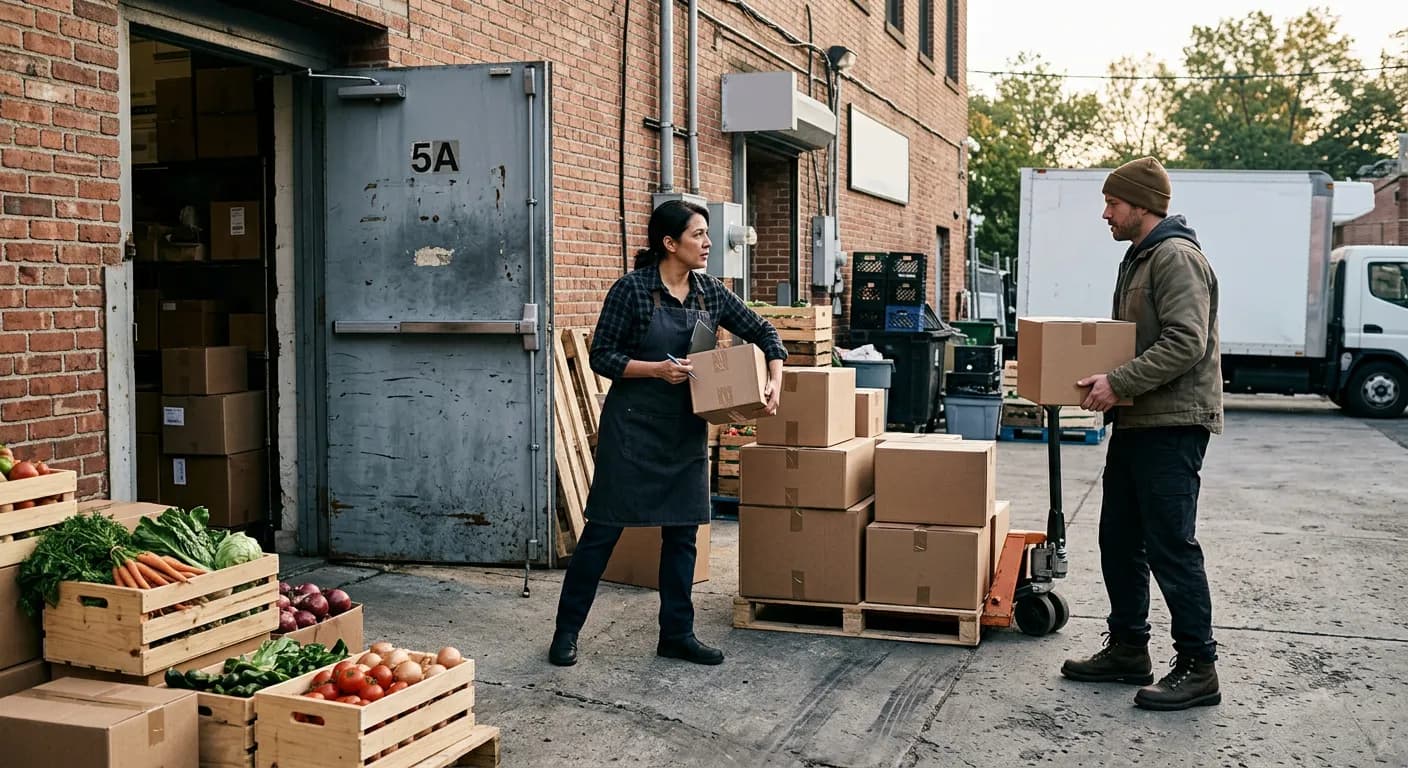
Check the delivery while the driver is still there, because that is the only moment when a shortage or damage is easy to prove. Compare the items and quantities against your order and the delivery receipt, look at expiry or best before dates, and open a few boxes to look for crushed packs, leaks or signs that chilled goods warmed up on the way. If something is wrong, write it on the receipt before you sign, take a photo of the item and its label, and ask the driver to acknowledge the note. A clean signature usually means you accepted everything as delivered, and that is hard to undo later. Weigh or count anything sold by weight or by piece for the first several deliveries, until you trust the supplier's numbers.
Advisors Ready To Help

Consultant
Financing Readiness · Site Selection

Coach
Low-Capital Startups · Site Selection

Mentor
Low-Capital Startups

Advisor
Franchise Agreements · Multi-Unit Expansion
Are you a franchise advisor? Get your own workspace here
How to raise a problem so it actually gets fixed
Report the problem the same day and in writing to the supplier's contact, with the order date, the item, what was wrong and the photo. Say plainly what you want, whether that is a replacement, a credit on the next order or a refund, since a vague complaint tends to get a vague reply. Keep the tone calm and specific, because the person reading it is usually a dispatcher or account officer who can fix a truck but cannot fix your mood.
If the supplier does not answer within a day or two, or the same fault keeps coming back, bring in the franchisor's support person or area manager with your record attached. The franchisor chose the supplier and usually has more say with the supplier than you do, and a documented pattern gives them a real reason to act.
Which records are worth keeping every week
Keep one folder, paper or on your phone, with each order, each delivery receipt and each complaint together in date order. Note the price of every item on every delivery, because assigned suppliers do raise prices and you will want to know when it happened and whether the franchisor announced it. Track late deliveries, short deliveries and rejected items, since a few lines a month tell you whether one bad week was an accident or a pattern.
Once a month, compare what you ordered with what you sold and what you threw away, because that gap shows waste, over-ordering or missing stock long before your income figures do. The same records protect you if a disagreement with the franchisor ever comes up over sales, quality or fees.
What to do when a supplier keeps failing deliveries
When documented problems keep repeating, ask the franchisor in writing what the remedy is. Options include a backup supplier, permission to buy that item locally, a price adjustment or a change of delivery route. Read the supplier clause in your franchise agreement first, because some agreements allow substitutes with approval and others do not, and buying outside the list without permission can put you in breach.
Keep a small emergency stock of the few items that would stop you from opening, so a missed truck costs you a bad afternoon and not a closed day. Owners of nearby branches of the same brand often lend each other a few packs in a pinch,. They are also the best people to ask whether a problem is yours or the supplier's.
Ready to see real options? Browse franchise opportunities with published costs across the Philippines.
Browse Franchises