Partyshots Photobooth
Business Services
- Franchise fee
- ₱50k
- Total investment
- ₱250k–₱400k
🎁 Start Your 1 Month Free Trial of the Full Plan, Exclusively for Brands & Advisors.Get Started
Browse 13 mobile unit franchises in Santiago, including 2 affordable franchise brands under ₱100k that pay back in about 3 months, 6 medium-investment franchise brands between ₱100k and ₱1M that pay back in 12 to 18 months, and 4 premium franchise brands above ₱1M that pay back in 24 to 36 months.
Updated
Cleaning & Pest Control

Cleaning & Pest Control
Santiago has about 1,816 businesses on the map, from food and drink to shops, services and clinics. Check what already operates near the spot you have in mind.
Population
148,5802020 census
Per 10,000 residents
122businesses we track
Business locations are based on Overture Maps open data (October 21, 2026 release) and do not represent a complete census of all businesses.
A mobile unit can cost anywhere from about ₱18,000 to eight figures nationwide. A lean cart-on-wheels concept sits at one end of that range, and a mobile arm of a much bigger operation sits at the other. Santiago already has a package built specifically for the city, running this format at a price well below the middle of that nationwide range. What separates the cheap end of this format from the costly end is less the vehicle itself than what backs it: training, supply, and how much of the paperwork gets handled centrally.
Santiago's own mobile-unit entry prices between ₱250,000 and ₱400,000, with a fee near ₱50,000 attached regardless of where in that range an operator lands. Payback is quoted at twelve months, which assumes the unit stays busy most days rather than sitting idle between routes. Elsewhere in the country, roughly a third of brands offering a mobile unit also let a franchisee choose an inline store instead, and about a quarter offer a kiosk as the alternative footprint. A smaller share can be run from home between routes, and fewer still hand over a cart or a full standalone building as options next to the mobile version. That flexibility does not reach Santiago yet, where the format on offer is the vehicle itself and nothing else. Whoever picks it up is buying a route, not a building.
Demand for a mobile setup comes from reaching customers who are not going to walk into a fixed storefront on their own. A workplace at lunch, a subdivision in the evening, a market day that moves through different areas on different mornings, all work the same way. The twelve-month payback quoted locally assumes a route dense enough to hit several of those stops in a single day, which is the whole point of choosing a vehicle over four walls in the first place. Nationwide, payback on this format ranges from as fast as three months up to three years. That spread mostly comes down to how much the vehicle itself costs to buy and fit out, rather than how well it sells once it is running. A cheaper unit recovers itself faster almost by definition, even before counting how good the route is. A route that covers several stops in one loop earns back its cost faster than one that only reaches a single spot, no matter what the vehicle itself costs.
Before committing to a mobile unit, ask how the route is actually planned: whether it is fixed by the brand, built around specific events and locations, or left for the operator to work out after the vehicle arrives. It is worth asking what happens to the unit itself if the business does not work out. A food cart can be repurposed or resold far more easily than a vehicle painted and fitted out for whichever brand ordered it. Fuel, maintenance, and driver wages rarely show up in the headline entry figure but shape the real monthly cost of keeping a mobile unit on the road. Asking for a realistic running-cost estimate, not just the entry price, is worth doing before signing anything. It is also worth asking who handles a breakdown on a selling day, since a fixed storefront can simply stay closed for an afternoon while a mobile unit off the road earns nothing at all until it is fixed.
The fee attached to Santiago's own package sits near ₱50,000, at the lean end of what this format charges nationwide. Fees nationwide run from about ₱18,000 for the smallest setups up to ₱1,500,000 for a mobile arm of a much larger, more established operation. That top figure buys a fully outfitted vehicle and a built-out brand system behind it, not a used van and a printed menu board. Santiago's own fee sits close to the cheap end of that spread, which matches an entry cost that is also close to the cheap end rather than the middle or the top of the nationwide range. The gap between those two figures is really a gap in scale, not in how the format itself works. Reading the fee next to the entry figure, rather than either number alone, gives a clearer sense of what a route here actually demands upfront.
Now that you've seen what's here, a real advisor can help you shortlist and weigh the options against your budget. Free, at your pace.

Financing Readiness · Site Selection

Low-Capital Startups

Franchise Agreements · Multi-Unit Expansion

Low-Capital Startups · Site Selection
Are you a franchise advisor?Get your own workspace here
Choose an industry to see all of its franchises in Santiago, with their fees and investment ranges.
Get honest answers on the space, staff and money this setup really needs, free and with no pressure.
Keeping products and workspace clean outdoors is the deciding skill, and this format works for you only when you can handle that, whichever of the 13 mobile franchises around Santiago you consider. Dust, heat and no full sink make daily upkeep tougher than in a store, and perishable items raise the stakes further. Ask what storage and hygiene equipment the franchisor supplies, and how inspections confirm that owners hold to standards.
Mobile or cart formats lower what a mobile unit franchise in Santiago costs to start, often near ₱18k instead of the ₱52k to ₱11.5M typical for a full shop. They skip many rent and build costs but may need a vehicle, a permit to operate on public ground and storage space. Ask the franchisor which mobile options exist. Compare the added items with a fixed location before concluding the smaller route is cheaper.
Cost per training day gives a quick view of the fee for mobile unit franchises in Santiago, which runs from ₱32k to ₱1.3M. Ask how many days of training the fee includes, then divide to see what each day costs you. This is only one angle, since the fee also buys the name and system, yet it helps you spot offers where a high fee comes with unusually little teaching.
Counted openly by volunteers and tools, Santiago shows 1,816 businesses in food and drink with 463, shops and retail with 439 and services with 423 categories, and some shops fall through the cracks. As a closing check, compare the count with your own gut impression after walking the area. If the map seems to describe a much busier or quieter place than you saw, trust your eyes and note the mismatch. Your own observations are the final step in turning a count into a decision.
Receipts and end of day readings are a short but firm part of each close when you run a mobile unit franchise in Santiago. Every sale gets a proper receipt, and the day's total is read and matched against the cash and digital payments collected. Skipping this makes the next morning harder. Ask the franchisor whether its sales system already prints receipts and produces an end of day report, so you know exactly what staff must do at the counter.
Budget limits may decide your headcount before anything else. If your working capital is tight, you may only afford a small crew at first, with yourself filling the gaps. That is a common way to start a mobile unit franchise in Santiago, as long as you are realistic about the hours you can personally cover. Keep a few months of payroll set aside in reserve, so a slow start does not force you to let good people go.
Yes, OFWs can own a mobile unit franchise in Santiago, and franchisees already operating in or near Santiago are a valuable source of local insight. Ask the franchisor for a list of nearby outlets, and have your family member visit one as a customer and, if possible, chat with its owner. Local owners know the realities of rent, staffing and competition in the area in ways a head office may not.
Emergency funds should stay untouched when you finance a mobile unit franchise in Santiago. Using the money meant for illness or job loss to buy a business leaves your family exposed if something goes wrong at home and at the branch at the same time. Keep that fund separate, and build franchise savings on top of it even if that means waiting longer to open.
Asking directly works better than assuming, because many franchisors help with location only when you request it. When you speak to the franchisor about a mobile unit in Santiago, say that you want help finding a spot and ask what they can do about it. Franchisors often respond to a specific request but may not volunteer services. Follow up with an email summarizing the reply so the answer is on record and nobody remembers it differently later.
Compare how many franchises run as each kind of setup in Santiago, from food carts to full standalone stores.
Compare how many mobile unit franchises take franchisees in each place, nearest first.
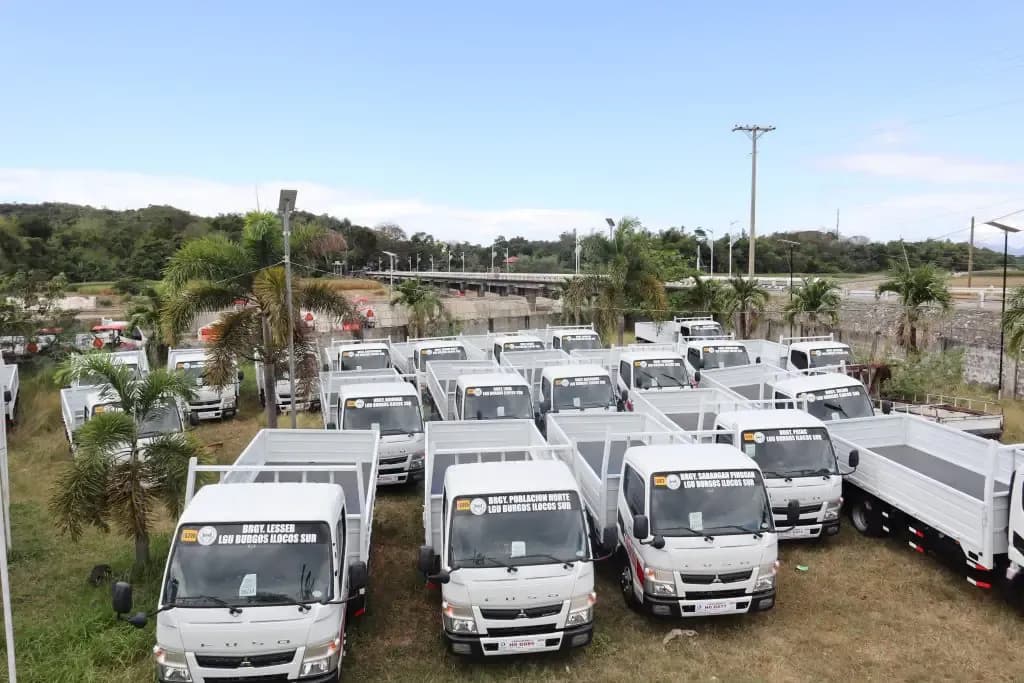
Learn the daily realities, routines, and operational demands of running a mobile franchise unit in the Philippines.
Aug 4, 2026 6 min read

Don't fall for high store counts. Learn why top franchise numbers don't guarantee profit and how to find the best business for you.
Jul 24, 2026 5 min read
Discover how to safely review a young franchise concept in the Philippines and protect your hard-earned capital.
Jul 24, 2026 5 min read