Your Tutorial Center
Tutorial & Review Center
- Franchise fee
- ₱150k
- Total investment
- ₱400k–₱800k
🎁 Start Your 1 Month Free Trial of the Full Plan, Exclusively for Brands & Advisors.Get Started
Browse 34 home-based or online franchises in Imus, including 15 affordable franchise brands under ₱100k that pay back in 2 to 12 months, 14 medium-investment franchise brands between ₱100k and ₱1M that pay back in 6 to 18 months, and 5 premium franchise brands above ₱1M that pay back in 18 to 22 months.
Updated

Retail & Convenience
Visit a branch

Real Estate
Visit a branch

Ice Cream & Desserts
Visit a branch

Logistics & Courier
Visit a branch

Payment & Remittance Center
Visit a branch

Logistics & Courier

Travel & Tours
Visit a branch
Cleaning & Pest Control

Education & Tutoring

Education & Tutoring

Education & Tutoring
Showing 24 of 38 (34 in Imus, 4 nearby)
Imus has about 8,658 businesses on the map, from food and drink to shops, services and clinics. Check what already operates near the spot you have in mind.
Population
496,7942020 census
Per 10,000 residents
174businesses we track
Business locations are based on Overture Maps open data (October 21, 2026 release) and do not represent a complete census of all businesses.
Setting up without a storefront is the whole idea behind a home-based or online franchise, and Imus, Cavite already has a working example of it. Money on the table starts around ₱400,000 and climbs to about ₱800,000, with the signing fee fixed at ₱150,000 either way and recovery quoted at eighteen months. Elsewhere in the country the same idea can begin for pocket change and scale up past ₱6M, so Imus sits well inside that spread rather than near either edge.
The gap between ₱400,000 and ₱800,000 in Imus is not mainly about how much stock gets bought first. At the lower figure, the setup stays entirely virtual. An online storefront, a phone number people call or message, and stock kept wherever there is space at home cover the whole operation. Spending closer to the top of that range usually adds a small inline counter, a rented corner inside an existing shop rather than a stand-alone unit. Orders taken online can then also be picked up or paid for in person. The signing fee does not move with that choice, so the extra money goes into fixtures, a point-of-sale setup, and enough stock to keep a physical corner from looking bare. Recovery is quoted at the same eighteen months either way, which treats the online-only route and the small counter route as equally realistic bets. Anyone weighing the two should think about whether messaging apps and social posts alone can generate orders, or whether a visible spot for people to walk past matters more.
Nationwide, a home-based or online franchise can start for barely more than a phone load. It can also run past ₱6M for the most built-out version, with fees from nothing up to about ₱1.2M. Payback nationwide is quoted anywhere from a single month to two years. Imus does not sit at either extreme of that spread. Its entry money, ₱400,000 to ₱800,000, lands in the middle third of what the format can cost. Its fee and payback line up close to what shows up across the rest of the country for this kind of setup. That middling position matters for planning. Someone comparing Imus with the nationwide range is not choosing between a bargain and a splurge. They are choosing a mid-priced way into a format that can otherwise run much leaner or much larger elsewhere. The money here covers a working setup rather than the cheapest possible entry or the fullest build a brand offers, which suits someone who wants more structure than a purely improvised online shop without gambling on the priciest configuration.
Day to day, a home-based or online operation in Imus runs on messages, calls, and whatever social media the owner keeps active. There is no window for people to walk past. Orders come in through chat, get packed at home or behind the small counter, and go out through a rider or a courier drop-off rather than being handed across a till all day. There is no rent to cover beyond the home itself unless the pricier inline option gets picked. That choice changes the picture: a landlord, a lease term, and opening hours to keep. Stock control becomes the daily discipline either way, since nothing on a screen sells itself if the shelf behind it runs empty. Staffing tends to stay light, often one person managing orders, packing, and deliveries together rather than a rostered team. The eighteen-month payback assumes steady order volume from month one. Early weeks spent building a following on social media, or through word of mouth, matter more here than they would for a shop that already has foot traffic doing some of that work.
Every setup counted nationwide is built to run from home or online by definition, but most also let a franchisee add something else on top. Close to two in five keep an inline counter as an option. A little over a third can instead run as a kiosk, a small stand rather than a home base. Food carts, mobile units, and full standalone buildings barely register next to those two, each held by only a small share of the field. That pattern says the real choice for someone starting in Imus is not whether to go fully virtual, since almost everything here allows that. The real choice is whether to pair it with a small physical presence once the online side proves itself. A kiosk suits someone who wants visibility without committing to a lease the size of a proper shop. An inline counter suits someone who already has a location in mind and wants deliveries and walk-ins to share the same stock. Either path stays optional rather than required, which keeps the entry money from stretching much beyond what a purely online setup already costs.
Now that you've seen what's here, a real advisor can help you shortlist and weigh the options against your budget. Free, at your pace.

Financing Readiness · Site Selection

Low-Capital Startups

Low-Capital Startups · Site Selection

Franchise Agreements · Multi-Unit Expansion
Are you a franchise advisor?Get your own workspace here
Choose an industry to see all of its franchises in Imus, with their fees and investment ranges.

Carts, kiosks, and full restaurants.
From ₱3k
Arce Dairy, Siopao King, K-Bowls
See brands
Padala, parcel, and delivery outlets.
From ₱10k
Ninja Van, J&T Express, Toktok
See brandsGet honest answers on the space, staff and money this setup really needs, free and with no pressure.
Neighbors who pass your gate every day could become buyers, and some of the 34 franchises in Imus offering a home-based or online setup may let you put up a small sign. A modest sign can turn people who walk by into regular customers. Some franchisors provide approved signage, while some communities restrict it. Ask the franchisor whether a gate sign is part of the package, and check whether your street or subdivision permits one.
Mobile or cart formats lower what a home-based or online franchise in Imus costs to start, often near ₱500 instead of the ₱10k to ₱1.4M typical for a full shop. They skip many rent and build costs but may need a vehicle, a permit to operate on public ground and storage space. Ask the franchisor which mobile options exist. Compare the added items with a fixed location before concluding the smaller route is cheaper.
If you are weighing a mall space against a street spot, remember that most franchisors quote a payback of 3 to 18 months for home-based or online setups in Imus, and the two can land very differently within it. Malls often bring steady foot traffic but higher rent, common area dues and fixed opening hours, while street spots may cost less yet depend more on the neighborhood. List the full monthly cost of each option. Comparing them side by side shows which gives you the shorter honest path to recovery.
Scanning the map, you will find 8,658 businesses in Imus across services with 2,399, food and drink with 2,049 and shops and retail with 1,895 categories, with some real shops absent from the data. Use the count to decide where to look more closely, not where to settle. Mark the three areas with the fewest similar businesses and the three with the most. Visit one of each kind and notice how customers behave, because that contrast teaches you what the count alone cannot.
Every franchisor has a different idea of what a fully staffed home-based or online looks like, and they rarely publish it in their marketing. When you meet them, ask for a sample staffing schedule from a real outlet, the roles involved and the typical labor cost as a share of sales. Compare that information across the several franchisors you are considering. Seeing the differences side by side helps you understand how much management work each option would demand of you in Imus.
It can be faster or slower than you expect, since opening a home-based or online franchise in Imus depends on approval, site, permits, fit-out and training all falling into place. The stages after contract signing are where your rent may already be running while nothing is earning yet. Try to negotiate a rent-free or reduced-rent period with the landlord to cover the fit-out, which takes some pressure off if a later stage drags on.
Ask whether the franchisor can terminate your contract for a home-based or online in Imus without cause, and how much notice they must give. Losing the franchise suddenly could leave you with equipment, a lease and staff but no right to operate. Ask which actions on your side could trigger termination. Have the termination clause explained to you in plain Filipino or English, whichever you understand more easily, before you sign.
You will usually find royalties written into home-based or online franchise agreements in Imus, but some franchisors leave them out. Take time to ask about technology fees too, since some franchisors charge for apps, online ordering systems or software updates separately from the royalty. Adding those to your monthly estimate keeps you from underestimating what you owe the franchisor once you are up and running.
Asking to read the operations manual, or at least its table of contents, before you sign is a fair request. A franchisor with a real system documents its procedures for daily operations, handling cash, managing staff and keeping the outlet in order. The manual shows whether there is a genuine method to follow or just a logo and supplies. For a home-based or online in Imus, a detailed manual is a strong sign that the franchisor has thought through how its outlets should run.
Compare how many franchises run as each kind of setup in Imus, from food carts to full standalone stores.
Compare how many home-based or online franchises take franchisees in each place, nearest first.
The home-based or online franchises with the smallest published starting packages, a good place to look if you want to start small.
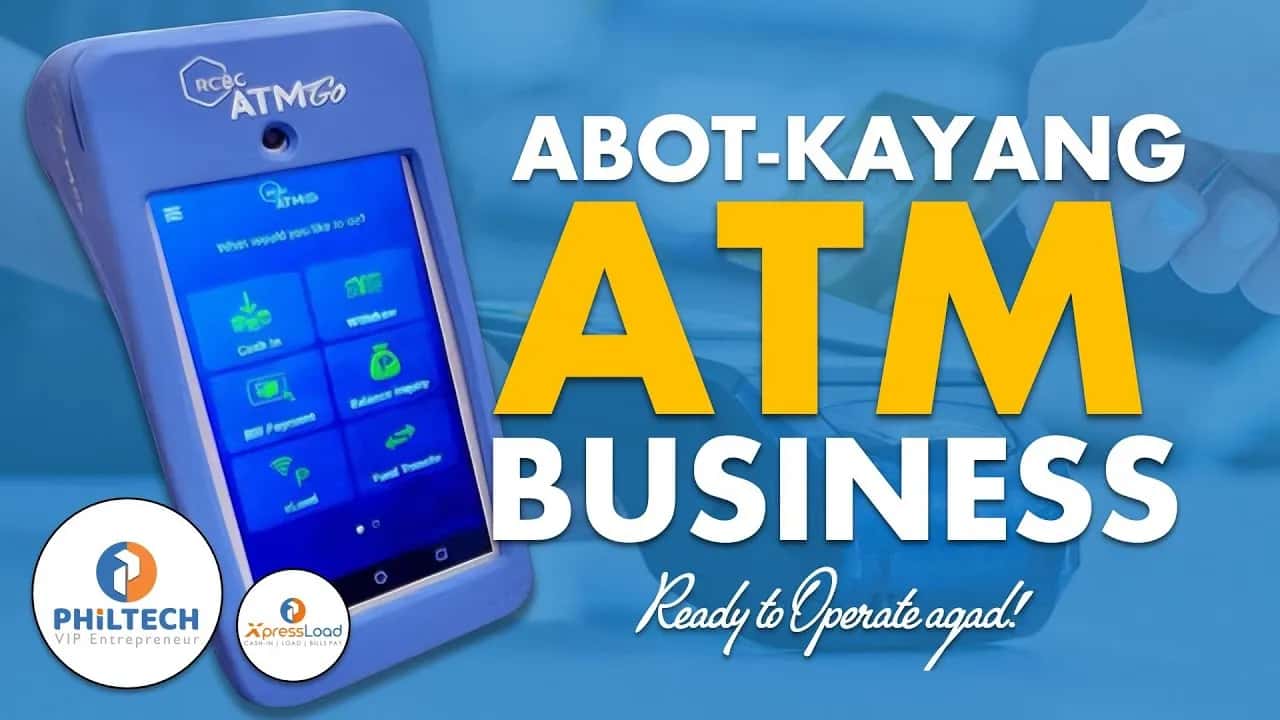
Payment & Remittance Center

Travel & Tours

Payment & Remittance Center

Travel & Tours
Business Services

Travel & Tours
Business Services

Pharmacy & Health
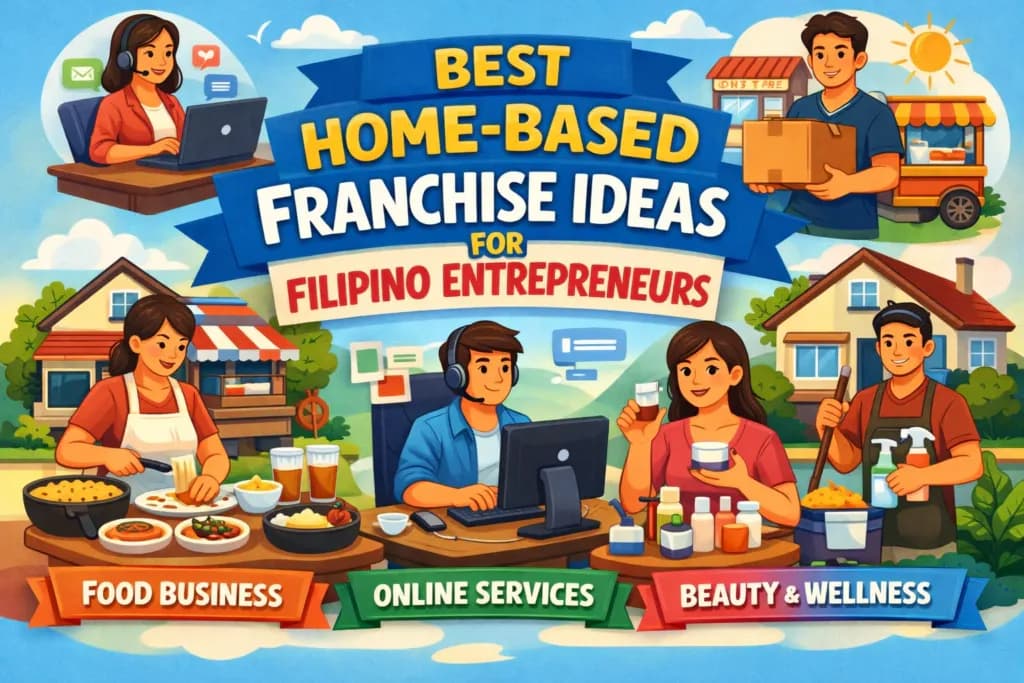
Discover how to launch and operate a successful home-based franchise in the Philippines, from choosing the right industry to managing daily operations.
Aug 4, 2026 5 min read

Learn what brand voice covers, why a franchisor guards it so closely, and how to work inside those rules while still sounding like your own neighborhood.
Sep 30, 2026 4 min read
Learn how a franchise owner can collect honest customer reviews by asking at the right moment, making it easy, and handling the bad ones well.
Sep 30, 2026 4 min read