How to Run a Home-Based Franchise in the Philippines
Want help applying this to your own plan? A real advisor can walk you through it, free.
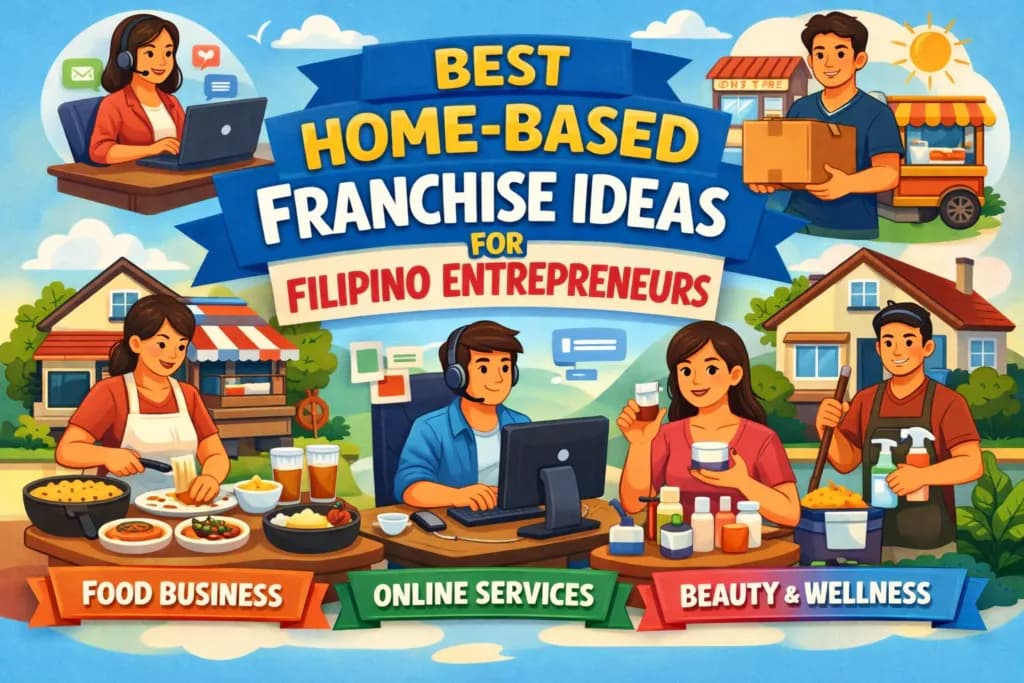
Get Free GuidanceStarting a business does not always require renting an expensive commercial space or securing a prime spot in a mall. For many aspiring Filipino entrepreneurs, Overseas Filipino Workers, and side-income seekers, operating from home offers a low-risk entry into franchising. This model reduces initial overhead costs while allowing you to leverage a proven brand system right from your living room or kitchen.
1. Identify Eligible Industries and Formats
Not all businesses are suitable for residential settings. In the Philippines, the home-based format works best for specific industries. Travel and tours agencies, business services, education, and tutoring are ideal because they require little physical storage and rely mostly on digital tools. Logistics and courier services can also operate from home if you have a garage or receiving area. Food and beverage franchises can function via a cloud kitchen setup, where you cook at home and sell exclusively through online delivery apps. When browsing the directory, look specifically for brands that officially support a home-based or online setup. Trying to force a traditional storefront model into a house often violates safety codes and operational guidelines.
2. Assess Your Initial Investment and Costs
Home-based systems are generally more affordable than inline retail stores because you bypass heavy construction, advanced security deposits, and commercial rent. Your budget will dictate which tier you can afford. Some small online business services or home-based concepts fall into the Under ₱50k Franchises tier. Affordable food concepts, like the street food brand Kwatogs, require an investment of ₱150,000 to ₱250,000, which includes a ₱50,000 franchise fee. If you have more capital, mid-tier options like Myungjang Korean Corndog require between ₱400,000 and ₱800,000. Beyond the franchise fee, you must calculate hidden home costs. These include upgrading your residential internet connection, purchasing dedicated storage shelves, and covering higher monthly electricity bills caused by running commercial-grade equipment.
3. Set Up Your Dedicated Home Workspace
Operating a professional business requires clear boundaries between personal life and daily operations. You need a dedicated room or a separate section of your house that is off-limits to family members and pets. For service-based or online franchises, this means a quiet office space with a reliable computer, a backup power supply, and a stable internet connection to handle client inquiries smoothly. For food-related setups, you must strictly isolate your business inventory from your personal groceries. Your kitchen must meet basic sanitary standards, featuring stainless steel preparation tables, proper ventilation, and pest control measures. A disorganized workspace leads to inventory errors, slow order fulfillment, and mixed-up business records.
Advisors Ready To Help

Consultant
Financing Readiness · Site Selection

Coach
Low-Capital Startups · Site Selection

Advisor
Franchise Agreements · Multi-Unit Expansion

Mentor
Low-Capital Startups
Are you a franchise advisor? Get your own workspace here
4. Understand Local Legal and Zoning Rules
Operating from home does not exempt you from government regulations. You must register your business with the Department of Trade and Industry or the Securities and Exchange Commission. You also need a business permit from your local barangay and the city hall. Before applying, verify your local zoning laws. Some residential villages and homeowners associations strictly prohibit commercial activities, frequent delivery trucks, or client visits. You must also secure a standard Bureau of Internal Revenue tax identification number for the business to issue official receipts. If you run a food concept, local health inspectors will examine your home kitchen to ensure it complies with community health and safety standards.
5. Manage Logistics and Delivery Systems
Since you lack a physical storefront to attract walk-in traffic, your logistics network becomes the lifeline of your franchise. For product-based businesses, you must partner with local courier services and third-party delivery applications to ship items to your buyers. Ensure your home address is easily accessible to delivery riders. If you operate a food brand, speed is critical. You must coordinate your cooking times perfectly with rider arrivals so the food reaches customers fresh and hot. For service franchises, like travel agencies or consulting, logistics means investing in secure digital payment channels and reliable communication apps to handle remote transactions efficiently without requiring physical meetings.
6. Evaluate Return on Investment and Growth
A lower initial investment often leads to a faster path to profitability, but you must still monitor your financial timeline closely. Lower overhead means you can keep your profit margins healthy. For instance, smaller street food brands like Kwatogs have an estimated return on investment timeline of eight months. Mid-sized food formats like Myungjang Korean Corndog typically project an estimated turnaround timeline of twelve months. Keep detailed daily logs of your revenue, ingredients used, utilities consumed, and delivery fees. Avoid mixing your personal cash with your business funds. If your home-based branch consistently hits its financial targets, you can use the accumulated profits to expand into a physical kiosk or inline store later.
Ready to see real options? Browse franchise opportunities with published costs across the Philippines.
Browse Franchises