JuanPay
Payment & Remittance Center
- Franchise fee
- ₱15k
- Total investment
- ₱50k–₱100k
Visit a branch
🎁 Start Your 1 Month Free Trial of the Full Plan, Exclusively for Brands & Advisors.Get Started
Browse 9 franchises up to ₱100k in Bais, with investments from ₱60k to ₱100k, franchise fees mostly between ₱15k and ₱37k, and most paying back in 4 to 12 months.
Updated
Payment & Remittance Center
Visit a branch

Payment & Remittance Center
Bais has about 270 businesses on the map, from food and drink to shops, services and clinics. Check what already operates near the spot you have in mind.
Population
84,3172020 census
Per 10,000 residents
32businesses we track
Business locations are based on Overture Maps open data (October 21, 2026 release) and do not represent a complete census of all businesses.
Format is the first decision at ₱100,000 in Bais, Negros Oriental, because the setups open to a small budget are counter builds sold by franchisors that operate nationwide. Nothing yet lists the city itself at this amount, so the whole choice rests on those wider offers, which begin at about ₱25,000. A newcomer can still find a food trade, a build and a spot that fit modest savings, and open within a few weeks.
The cheapest builds start at about ₱25,000 and the dearest use the full ₱100,000, and the gap between them mostly comes down to equipment and the size of the first stock. A light cart with a simple menu sits near the bottom, while a fuller kiosk with a refrigerator, a griddle or a blender setup sits near the top. Fees run from nothing to ₱40,000, and a zero fee usually means the franchisor earns from the supplies that the owner buys later. A larger fee often pays for training and a tested menu. Looking at the fee, the equipment list and the first stock together shows what each build costs by the time the first customer is served. Permits, a small cash float and a few days of practice with the menu should also be counted before the total is settled, since they are paid even when the build itself is cheap.
Bais is a coastal city that draws visitors for boat trips on the Tañon Strait, and its public market, schools and sugar mills give the center a steady crowd of residents. Visitors waiting for a boat or coming back from the water want cold drinks and quick snacks. Residents buy cooked food at the market and on the way home from work. Students and mill workers stop for inexpensive bites in the afternoon. A cart or kiosk close to the market, the school gate or the bus stop meets those customers without the rent of a shop. Because the budget is small, the right spot matters more than the size of the menu, and a few days of watching the foot traffic pays for itself. Weekends bring the largest crowds when visitors and families come to the water, so a stall should plan extra stock for Saturday and Sunday. Because the stall is small, a clear sign with the menu and prices also saves time and brings in walk-up buyers who would otherwise pass by.
A typical day starts before sunrise with a trip to the market for fresh stock, followed by prep and a quick clean of the cart or kiosk. Sales usually come in two waves, a morning rush for breakfast snacks and drinks, and a longer afternoon stretch when school lets out and workers head home. Most owners work the counter themselves, with a relative or a part-time helper on busy days. At closing, the leftover stock is counted and recorded, and the cash is separated into money for tomorrow's supplies and money for the owner. Keeping those two apart from the first week is the habit that keeps a small stall from running out of working capital. Some owners rotate a second product during the slower months, such as a hot snack in the rainy season, to keep customers coming back. Cleaning supplies, gas or charcoal, cups and packaging add up each week, so they belong in the daily cost estimate as well.
Franchisors that sell nationwide at this budget quote payback within about a year at the slow end. A quicker return depends on a busy spot and a product that sells out daily, so the quoted time is a target and not a promise. Owners can test it by working out how many items must be sold each day to cover stock, wages and the franchise fee, and then watching whether the counter reaches that number in the first month. Rainy days, market days and school breaks change sales, so a simple record over several weeks gives a more honest picture than any single day. The same record also shows when it makes sense to add a second product. Owners who finish the first quarter with a clear record of their best hours and best sellers are better placed to decide whether to expand the menu or to open a second counter.
Now that you've seen what's here, a real advisor can help you shortlist and weigh the options against your budget. Free, at your pace.

Financing Readiness · Site Selection

Franchise Agreements · Multi-Unit Expansion

Low-Capital Startups · Site Selection

Low-Capital Startups
Are you a franchise advisor?Get your own workspace here
Choose an industry to see its franchises in Bais, with their fees and investment ranges.
Get honest answers on what this budget really covers, fees and payback, free and with no pressure.
Largely yes, since ₱100k meets nine franchises in Bais that quote an investment between ₱50k and ₱100k. The lease adds a second large commitment, so add the deposit, advance rent and expected monthly rent to the package price. Ask landlords what they require upfront and how rent changes later, and confirm that ₱100k still pays everything required before the first sale. Seeing that total early shows whether the amount is truly enough.
Local presence differs by field, and for ₱100k in Bais the franchise counts are food & beverage with 6 franchises, financial services with 2 and bakery & pastry with 1. Some fields already have familiar outlets around town, which can ease customer trust, while others will be new to most shoppers. Notice which fields you have seen operating nearby and which you have not. Familiar fields give you shoppers who understand the product, and unfamiliar fields give you a chance to stand out, so weigh which you are ready to handle.
Unit economics sit underneath the 4 to 12 months payback that ₱100k franchisors in Bais usually quote. Knowing what each cup, plate or item costs you to make, and what it sells for, tells you how many units must move to cover your bills and recover your money. Ask the franchisor for the cost per item on its main products, then check those figures yourself against current supply prices.
Sketch first, verify later is a good rule for the 270 businesses in Bais, led by services with 70, food and drink with 56 and shops and retail with 53, since open data is only a starting picture. Mark the mapped businesses on a printed copy of your street, then walk it and add the ones you see that are missing. The marked up page becomes your own count and shows how much the map leaves out.
Franchisor training sometimes happens far from Bais, adding travel, lodging and meals to the cost of opening a ₱100k franchise, and those expenses often fall on you. When that happens, the money comes from your working capital or opening budget. Ask where training takes place, how long it runs, and who pays for travel, then budget for yourself and any staff who need to attend.
Ownership while abroad is realistic as long as you accept that you will not control every detail. Your relative may arrange shelves differently or speak to customers in their own way at the ₱100k franchise in Bais. Focus your attention on the results that matter most, such as sales, cash deposits and cleanliness, and let the small choices go. Letting go of minor matters also tells your relative that you trust them, which keeps them motivated.
Rent increases can quietly erode the profit of a small outlet over time. A ₱100k franchise in Bais might look healthy at the start, but a landlord who raises rent at renewal can change the math completely. Negotiate a lease with clear escalation terms written in, and try to match the lease length to your franchise term so you are not forced to move a running business halfway through.
Planning rent for franchises priced between ₱50k and ₱100k in Bais gets easier when you remember that you may be paying rent before the outlet earns anything at all. Fit out, permits and training can take time, and many landlords start charging once the lease begins rather than once you open. Ask each landlord exactly when rent starts counting, and try to time your lease signing so the gap between paying rent and making sales stays as short as possible.
Compare how many franchises start at each budget level in Bais, from the smallest packages up.
Compare how many ₱100k franchises take franchisees in each place, nearest first.
Franchises at the next budget level, ₱200k, worth a look if you can stretch your savings a little.
Siomai & Dimsum

Ice Cream & Desserts

Coffee Shop

Street Food & Snacks

Payment & Remittance Center

Cakes & Pastries
Siomai & Dimsum
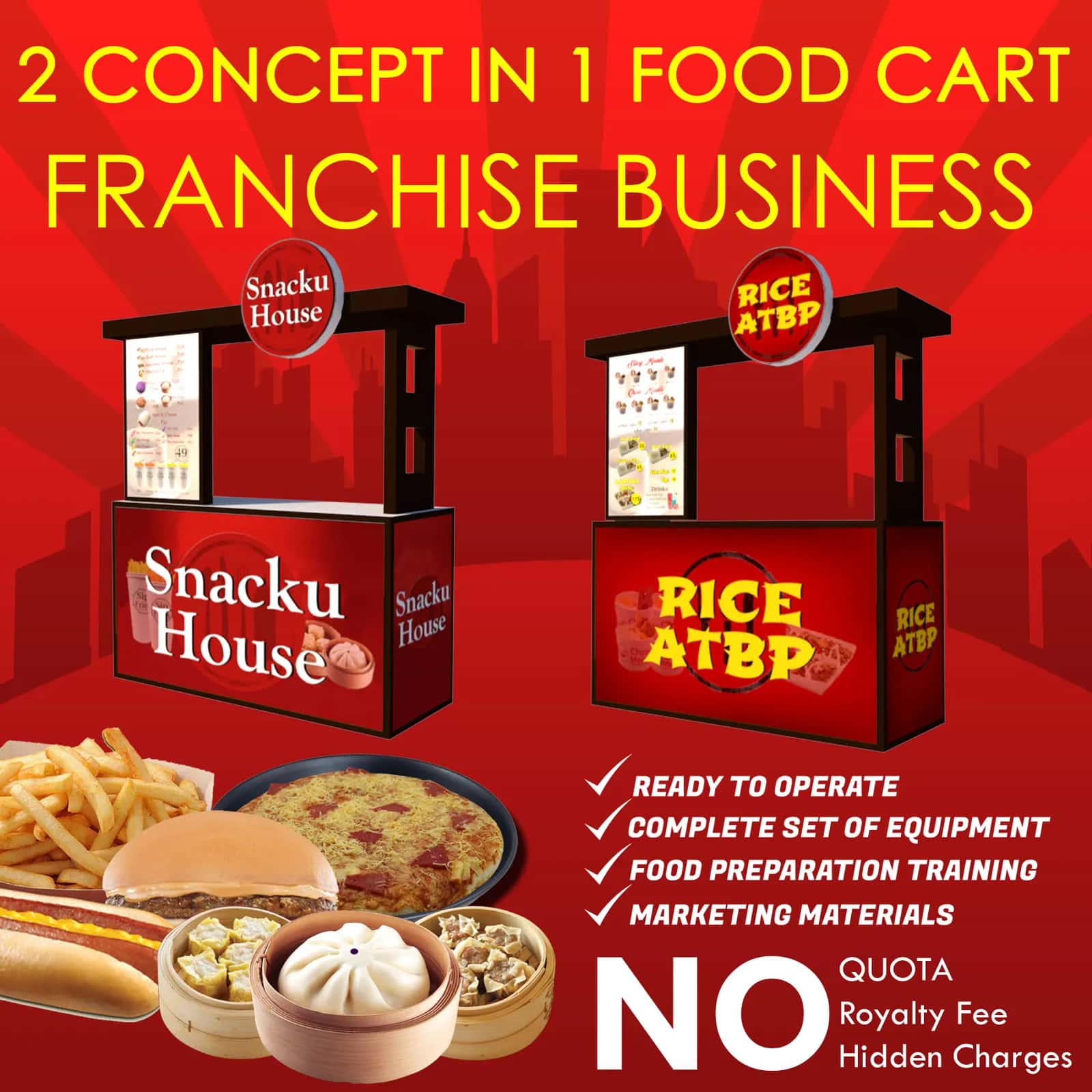
Street Food & Snacks

Learn practical inventory control steps for your Philippine franchise to cut waste, prevent loss, and protect your capital.
Aug 14, 2026 6 min read
Learn how non-compete clauses work when exiting a franchise agreement in the Philippines, protecting your investment after closing.
Jul 20, 2026 5 min read

Learn how to secure financing for your Philippine franchise, from preparation to approval. A practical guide for new operators and OFWs.
Jul 20, 2026 5 min read