KoTea
Milk Tea & Boba
- Franchise fee
- ₱17k
- Total investment
- ₱17k–₱30k
🎁 Start Your 1 Month Free Trial of the Full Plan, Exclusively for Brands & Advisors.Get Started
Browse a milk tea franchise up to ₱50k, with an investment of about ₱30k and a franchise fee of about ₱17k.
Updated
Under ₱50,000 is about as small as a milk tea and boba franchise gets. The packaged amount runs from around ₱17,000 to just under ₱30,000, with the brand fee sitting close to ₱17,000 inside that same range rather than stacked on top of it. A food cart, a kiosk, and an inline store are all listed as available formats at this size, though the money involved keeps every one of them compact. This is a budget for testing the category on a shoestring, not for opening anything with real floor space.
The full spend at this level sits between roughly ₱17,000 and ₱30,000, and the brand fee makes up most of that amount rather than sitting as a separate line on top. That structure means most of the money goes toward the right to use the brand and its recipes, with comparatively little left for equipment, signage, or a starting batch of ingredients once the fee is covered. At the lower end of this range, expect a bare setup: basic tools, a small first batch of stock, and simple signage rather than anything custom-built. At the upper end, closer to ₱30,000, there is a little more room for a slightly better cart or kiosk build, though still far from a fully equipped station. Either way, the packaged figure is close to the whole cost of entry, with little cushion for extras.
A food cart, a kiosk, and an inline store are all listed as formats at this budget. The total spend is small enough that none of them can be built out in full. At this size, the difference between the three labels is mostly about setup and signage rather than a real jump in scale. The total spend leaves little room for a materially bigger build regardless of which one is chosen. A cart or kiosk built at this budget is likely to be a simple stand rather than a fitted unit. An inline store here is closer to a small counter than a space with seating. Picking a label should come down to where the operator plans to sell: a fixed spot, a moving cart, or inside someone else's shop. It rarely means a meaningfully different setup between them.
A setup at this budget is built to be run by one person, usually the owner. There is no room in the numbers for paid staff on top of the packaged cost. Ingredients need to be sourced and mixed in small batches, which keeps waste manageable. It also caps how many cups can be sold in a single day without a second set of hands. Selling in a shared space, a covered market, a school gate, or a spot inside someone else's establishment tends to fit this budget better than a rented storefront. Rent alone could exceed the entire packaged amount. This is a hands-on, personally run operation from the first day, closer to a side hustle built around a recipe than a business with employees and fixed hours. The trade-off for that low cost is a low limit on daily sales, since one person working alone can only serve so many customers before a queue starts to form.
Before committing at this budget, it helps to have a specific selling spot already lined up. The packaged amount does not stretch far enough to cover an extended search or an idle first month of rent. It also helps to set aside a small amount beyond the package itself for permits, a vendor's fee if selling in a shared space, and enough ingredients to restock more than once before any sales come in. Since the brand fee makes up most of the total spend here, it is worth being clear on exactly what training and support come with it before handing over the money. Treating this budget as a test of the category, rather than a finished business plan, is the more realistic way to approach the small amount of room it leaves for anything going wrong. Keeping a small reserve on hand for a slow first week, rather than spending every peso on the initial setup, is what usually separates a smooth start from a stressful one.
Now that you've seen what's here, a real advisor can help you shortlist and weigh the options against your budget. Free, at your pace.

Financing Readiness · Site Selection

Low-Capital Startups

Franchise Agreements · Multi-Unit Expansion

Low-Capital Startups · Site Selection
Are you a franchise advisor?Get your own workspace here
Compare milk tea franchises with other coffee & milk tea businesses up to ₱50k, each with its own brands, fees and investment ranges.
Get honest answers on fees, payback and the best setups for your area, free and with no pressure.
Talking with your spouse or household before raising ₱50k for a milk tea franchise matters as much as the money itself. Saving, borrowing or pledging assets affects everyone at home, and support is easier to keep when people agree early. Sit down together, share the full cost and how you plan to fund it, and settle what the family will do if the business needs more time to earn.
Owners in milk tea at ₱50k typically operate food carts with 1 franchise, kiosks with 1 and inline stores with 1. Hours of operation vary widely between formats, and longer hours mean more shifts to fill and more electricity to pay for. Ask each franchisor what operating hours they require, whether you can adjust them to suit your location and what penalties apply if you close early or skip days. Long hours that suit a busy area can be a burden in a quieter neighborhood.
Packages often differ in how much stock comes with ₱50k, which is easy to overlook. Some milk tea franchisors include a generous opening supply, while others include only enough to test the equipment, and both still call it initial stock. Ask the franchisor for the peso value of the starter supplies inside the package, which gives you a clear figure to compare with other offers.
Asking whether a milk tea franchise at ₱50k is a good first choice is wise, and the answer gets clearer once you write down what you would do in the first year. Plan those months in rough steps, covering training, opening, hiring and review points. Notice which steps you can already picture and which leave you stuck. The stuck ones show where to prepare before you commit.
Renovation and fit-out are costs that a ₱50k package often leaves to you, especially if you lease a bare unit. Franchisors tend to have strict design standards, and bringing an empty space up to their look can cost more than first-time owners expect. Before you sign, request the franchisor's store specifications and have a local contractor quote the work so you are planning from a real figure instead of a guess.
Compare how many milk tea franchises start at each budget level, from the smallest packages up.
Milk Tea franchises priced close to your budget, worth a look if you can stretch your savings or want to spend less.

Milk Tea & Boba

Milk Tea & Boba

Milk Tea & Boba
Milk Tea & Boba
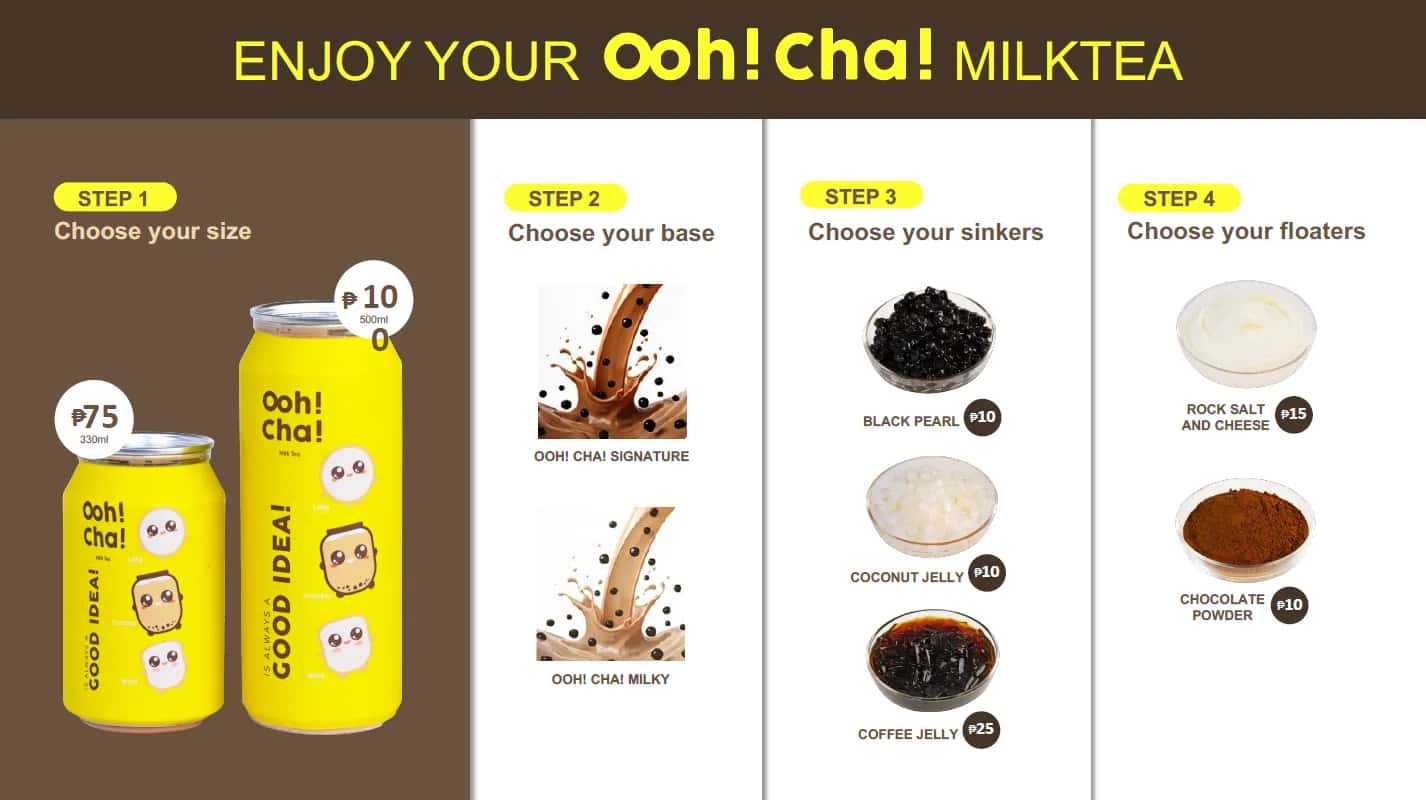
Milk Tea & Boba

Milk Tea & Boba
Milk Tea & Boba
Milk Tea & Boba
Compare milk tea franchises with other industries at the same budget, each with its own brands, fees and investment ranges.

Carts, kiosks, and full restaurants.
9 brandsFrom ₱3k
Konam, Arce Dairy, K-Bowls +6 more
See brands
Padala, parcel, and delivery outlets.
3 brandsFrom ₱10k
Ninja Van, J&T Express, Toktok
See brandsCompare industries by budget, daily work and payback before you choose one, free and with no pressure.

Learn how non-compete clauses work when exiting a franchise agreement in the Philippines, protecting your investment after closing.
Jul 20, 2026 5 min read
Learn practical inventory control steps for your Philippine franchise to cut waste, prevent loss, and protect your capital.
Aug 14, 2026 6 min read

Learn what dispute resolution clauses mean for Philippine franchisees. Protect your investment with this guide to arbitration, mediation, and litigation steps.
Jul 21, 2026 6 min read