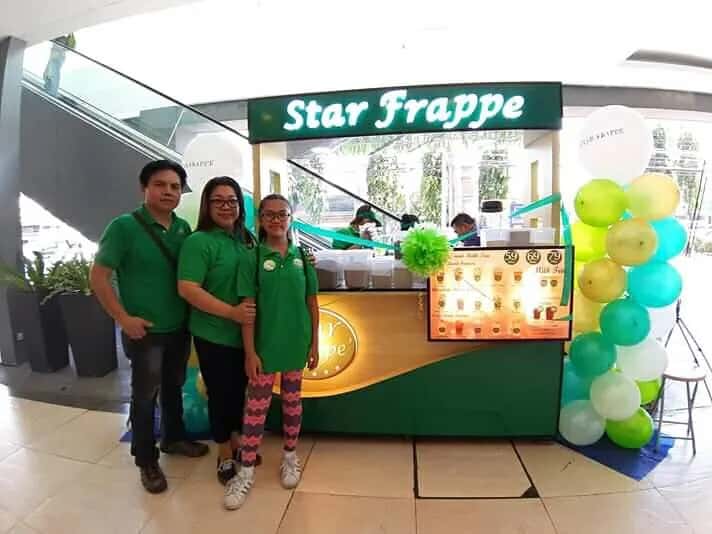
Star Frappe'
Coffee Shop
- Franchise fee
- ₱129k
- Total investment
- ₱129k–₱179k
🎁 Start Your 1 Month Free Trial of the Full Plan, Exclusively for Brands & Advisors.Get Started
Browse a coffee & milk tea franchise up to ₱200k, with an investment of about ₱179k, a franchise fee of about ₱129k, and paying back in about 6 months.
Updated
With a budget of up to ₱200,000, a coffee or milk tea setup here costs about ₱129,000 to ₱179,000, with the license itself priced around ₱129,000 of that total. That fee eats most of the entry cost, leaving comparatively little for equipment beyond the basics. Options priced exactly at this ₱200,000 limit run thin, so this is mostly about what that money has to cover rather than a wide shortlist to compare. A buyer here is testing whether a small drinks business fits them, not picking apart the reputation of an established name.
₱129,000 of a roughly ₱179,000 top-end setup is the license fee alone, which leaves a fairly tight margin for the physical build. That split suggests most of what a buyer pays for at this price is the brand itself, not an elaborate counter or a large equipment list. Claimed payback lands around six months, quick by the standards of this category. A return that fast usually says more about how little total capital is at risk than about unusually strong sales. A fee this close to the whole setup cost also tends to buy relatively little beyond the license itself: a short training period and a starter batch of supplies, rather than site scouting or ongoing marketing support. Those extras generally show up only once a fee climbs well past this level.
A food cart and a kiosk are what a buyer gets at this price, and neither needs much beyond a counter, basic equipment, and a location with steady foot traffic. A cart works for a site that is only available part of the day or changes hands often. A kiosk assumes something closer to a permanent corner. Both formats keep the daily routine simple: one or two people, a short menu, and a queue that has to move fast enough to make the thin per-cup margin add up. Whichever format gets chosen, the owner is usually the one buying stock, preparing drinks, and handling cash in the same shift, since there is little room in the budget to pay a second wage before sales are proven.
Margin per cup stays thin at this size no matter the brand, since the model leans on volume and speed rather than a markup big enough to carry a slow shift on its own. The fast six-month payback mostly reflects how little total capital sits at risk, not a wide profit hiding behind the counter. Once that early cost is recovered, the money coming in is capped by how many cups a single counter can move in a day. Neither a cart nor a kiosk has room to add a second till or a bigger menu without turning into a different kind of business. Growth from a ₱200,000 budget usually means saving early profit toward a second, near-identical cart or kiosk in a different spot. Trying to expand the first site past what its counter and its foot traffic can already support rarely pays off the way a bigger menu or a longer queue might suggest on paper.
Before committing at this price, it is worth confirming exactly what the roughly ₱129,000 fee includes, since a figure this close to the total setup cost leaves little room for surprises later. It is also worth asking whether the six-month payback estimate assumes a specific kind of site, since a cart or kiosk this size has very little buffer if the first months run slower than expected. A brand unwilling to answer either question plainly is worth treating with more caution than the low price tag might otherwise suggest. Getting those answers in writing before any money changes hands matters more at this budget than at a higher one, since there is less cushion here to absorb a bad surprise. It is also worth asking plainly what happens after the training period ends and the starter supplies run out, since ongoing supply terms at this budget are rarely spelled out upfront. A buyer who has to guess at restocking costs after signing is the one most likely to find the real margin thinner than the headline numbers suggested.
Now that you've seen what's here, a real advisor can help you shortlist and weigh the options against your budget. Free, at your pace.

Financing Readiness · Site Selection

Low-Capital Startups · Site Selection

Franchise Agreements · Multi-Unit Expansion

Low-Capital Startups
Are you a franchise advisor?Get your own workspace here
Choose a kind of coffee & milk tea business and see only its franchises up to ₱200k, with their fees and investment ranges.
Get honest answers on fees, payback and the best setups for your area, free and with no pressure.
Starting a franchise is a big step, and a coffee & milk tea franchise at ₱200k makes a good first choice when you know what you want from it. Some people want extra income, others want a full career change, and others want something for family members to run. Write your goal in a single sentence and check whether this franchise realistically serves it. A clear goal makes every later decision easier.
Customer mix should steer your choice among food carts with 1 franchise and kiosks with 1 in coffee & milk tea at ₱200k. Students, office workers and families each visit at different hours and expect different things from the unit. Spend time watching who actually passes your spot and when, then pick the format that suits those people and their schedules, so your hours and your crew line up with the customers who are really around.
Even an all in ₱200k package usually covers only equipment, supplies, training and signage, so treat the all in label as the start of your questions rather than the final word. Rent, renovation, permits and staff wages can still fall outside it. Ask the franchisor to list the costs a new franchisee typically pays beyond the package, then line that list up against what other franchisors tell you before you decide which offer is really complete.
Cooperatives are worth a look if a bank loan feels out of reach, since many lend to members on friendlier terms for livelihood ventures like a coffee & milk tea franchise. Membership usually requires a share capital contribution and some time as an active member before you can borrow. If you already belong to a cooperative through work or your community, ask the loan officer how much you could borrow toward ₱200k and how long the membership requirement takes.
Even a coffee & milk tea franchise between ₱100k and ₱200k comes with ongoing administrative costs. Bookkeeping, payroll processing, government filings and the time it takes to handle them all cost money, whether you pay someone or do the work yourself at the expense of other income. Decide early which of these you will handle and which you will outsource, then price the outsourced parts so they appear in your monthly plan.
Compare how many coffee & milk tea franchises start at each budget level, from the smallest packages up.
Coffee & Milk Tea franchises priced close to your budget, worth a look if you can stretch your savings or want to spend less.

Milk Tea & Boba

Coffee Shop

Coffee Shop
Coffee Shop

Milk Tea & Boba

Coffee Shop
Coffee Shop

Milk Tea & Boba
Compare coffee & milk tea franchises with other industries at the same budget, each with its own brands, fees and investment ranges.
Compare industries by budget, daily work and payback before you choose one, free and with no pressure.

Learn practical inventory control steps for your Philippine franchise to cut waste, prevent loss, and protect your capital.
Aug 14, 2026 6 min read
Learn how non-compete clauses work when exiting a franchise agreement in the Philippines, protecting your investment after closing.
Jul 20, 2026 5 min read

Learn how to secure financing for your Philippine franchise, from preparation to approval. A practical guide for new operators and OFWs.
Jul 20, 2026 5 min read