Sole Proprietorship vs Corp: Choosing Your Franchise Structure
Want help applying this to your own plan? A real advisor can walk you through it, free.
Get Free GuidanceChoosing between a sole proprietorship and a corporation is a critical step when starting a franchise in the Philippines. It affects your taxes, personal liability, and operating freedom. This guide breaks down the key differences for first time operators and OFWs looking to invest in a business. Making the right choice now prevents legal and financial headaches later.
Sole Proprietorship: Simplicity and Control
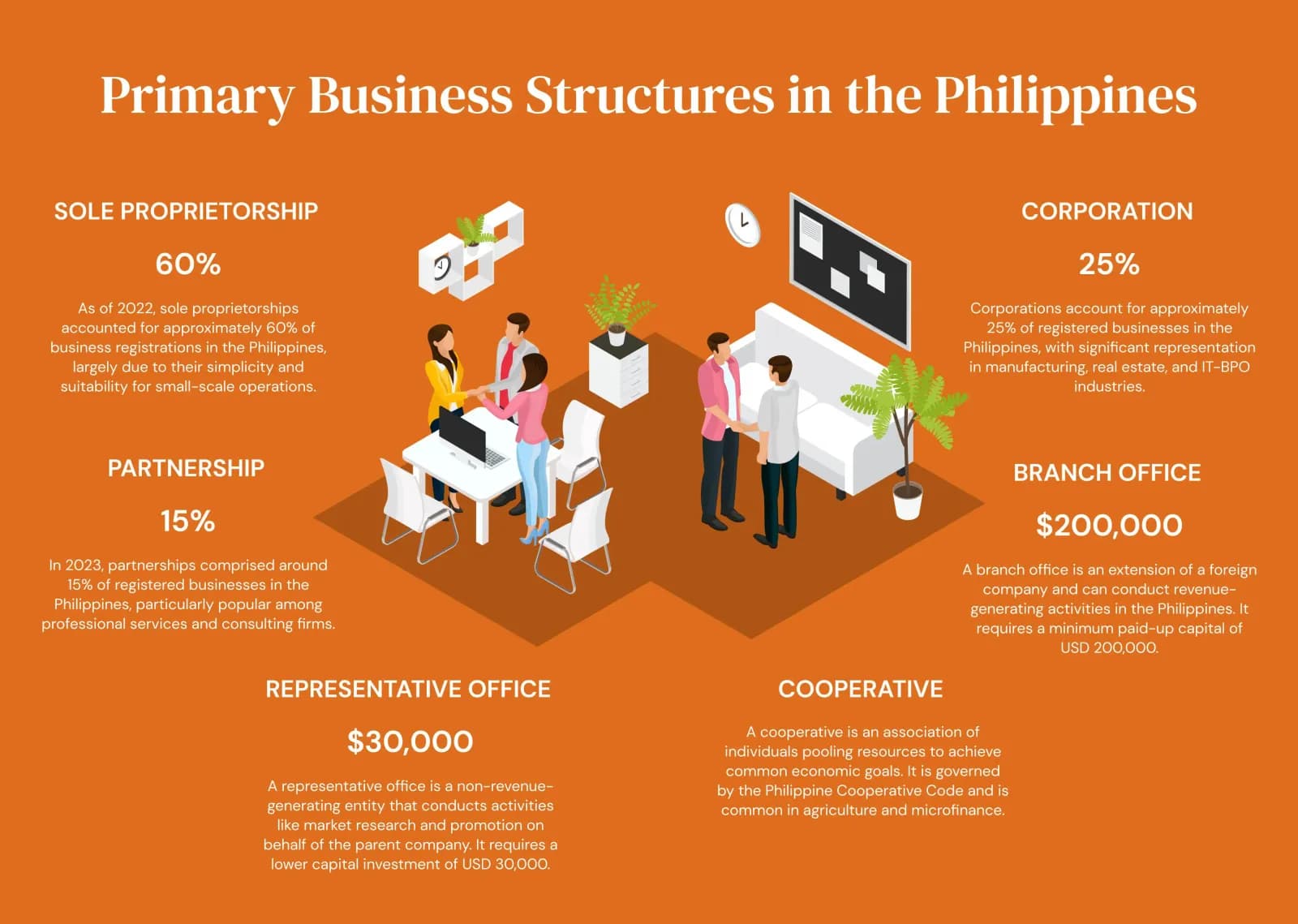
A sole proprietorship is the simplest business structure in the Philippines. It is ideal for small, single unit franchises such as a food cart like Icy Pink Scramble or a small kiosk. You are the sole owner, meaning you have total control over daily decisions. Registration is done through the Department of Trade and Industry, making it faster and cheaper than a corporation. However, you are personally liable for all business debts. If the business fails or gets sued, your personal assets like your home or savings are at risk. This setup is best for side income seekers or those starting a single, manageable franchise location.
Corporation: Liability Protection and Growth
A corporation is a separate legal entity from you, the owner. It is recommended for larger, higher risk, or multi unit investments such as a standalone restaurant, a full Bakeshop like The French Baker, or a major beauty center. The primary benefit is limited liability. Your personal assets are protected, and you are generally only liable up to the amount of your investment. It allows for multiple shareholders, making it easier to raise capital. Registration is done through the Securities and Exchange Commission, which involves more complex paperwork. Corporations offer better scalability, making them suitable if you plan to operate multiple locations or partner with investors.
Registration Costs and Legal Requirements
Sole proprietorship registration is straightforward and inexpensive. DTI registration fees depend on your business scope, whether barangay, city, or national. After DTI, you need a Barangay Clearance, Mayor’s Permit, and BIR registration. A corporation requires more investment, including SEC filing fees, attorney fees for creating articles of incorporation, and minimum capital requirements. Costs include SEC registration fees, accountant fees, and securing a corporate secretary. While a sole proprietorship might cost just a few thousand pesos, forming a corporation involves higher upfront expenses. The long term protection for larger investments, however, often justifies these initial costs.
Advisors Ready To Help

Consultant
Financing Readiness · Site Selection

Mentor
Low-Capital Startups

Coach
Low-Capital Startups · Site Selection

Advisor
Franchise Agreements · Multi-Unit Expansion
Are you a franchise advisor? Get your own workspace here
Taxation and Accounting Differences
Sole proprietors are taxed based on personal income tax rates. You may opt for the 8% flat tax on gross sales if your sales do not exceed the VAT threshold. This is simpler to calculate and pay. Corporations are taxed under the Corporate Income Tax rate based on their net income. A corporation requires more diligent, complex, and professional accounting, which can add to your operating expenses. You must file quarterly income tax returns and annual reports. While the tax rate might differ, the primary difference is the complexity of filing and compliance for a corporation compared to the straightforward reporting of a sole proprietor.
Factors to Consider Before Deciding
Think about your franchise type. A low cost food cart like Captain Calamares can work well as a sole proprietorship. A large, high investment business like a Chic a Boo Fried Chicken requires the protection of a corporation. Assess your risk tolerance and your capital. If you are financing everything yourself and starting small, a sole proprietorship is fine. If you have partners, you need a corporation. Also, consider your long term plans. If you plan to scale up to three or four locations quickly, start with a corporation. Proper planning in the beginning saves money on restructuring later.
Steps to Finalize Your Choice
First, evaluate the total investment required, using the directory to compare options like the ₱1.5M A Little Tea or a ₱5M+ The French Baker. Second, assess your risk exposure, recognizing that a corporation provides better protection. Third, review your, or your partnership's, financial capacity to handle the registration and accounting costs. For sole proprietorships, register with DTI immediately. For corporations, hire an accountant to prepare your articles of incorporation and file with the SEC. Consulting a professional can help you finalize which structure fits your financial goals and operational style.
Ready to see real options? Browse franchise opportunities with published costs across the Philippines.
Browse Franchises